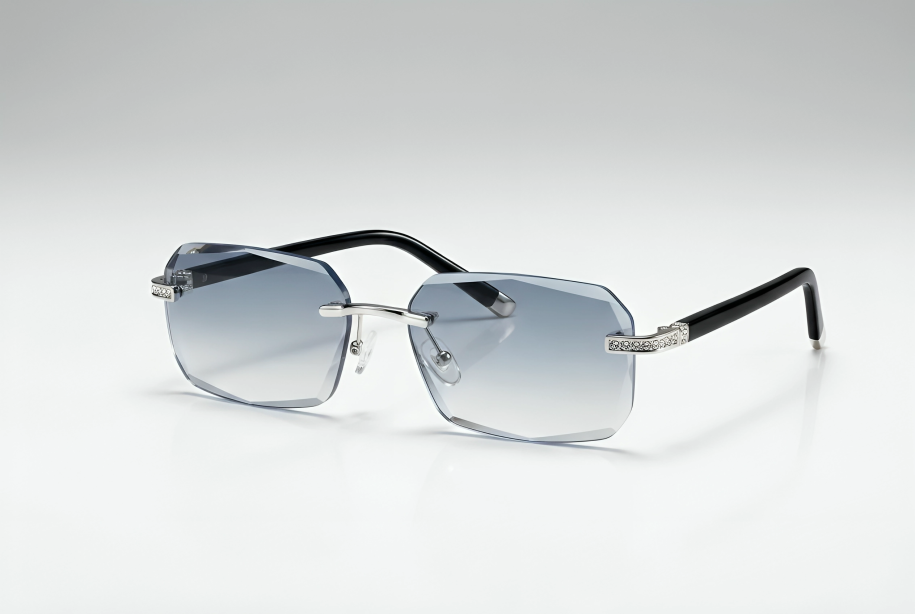
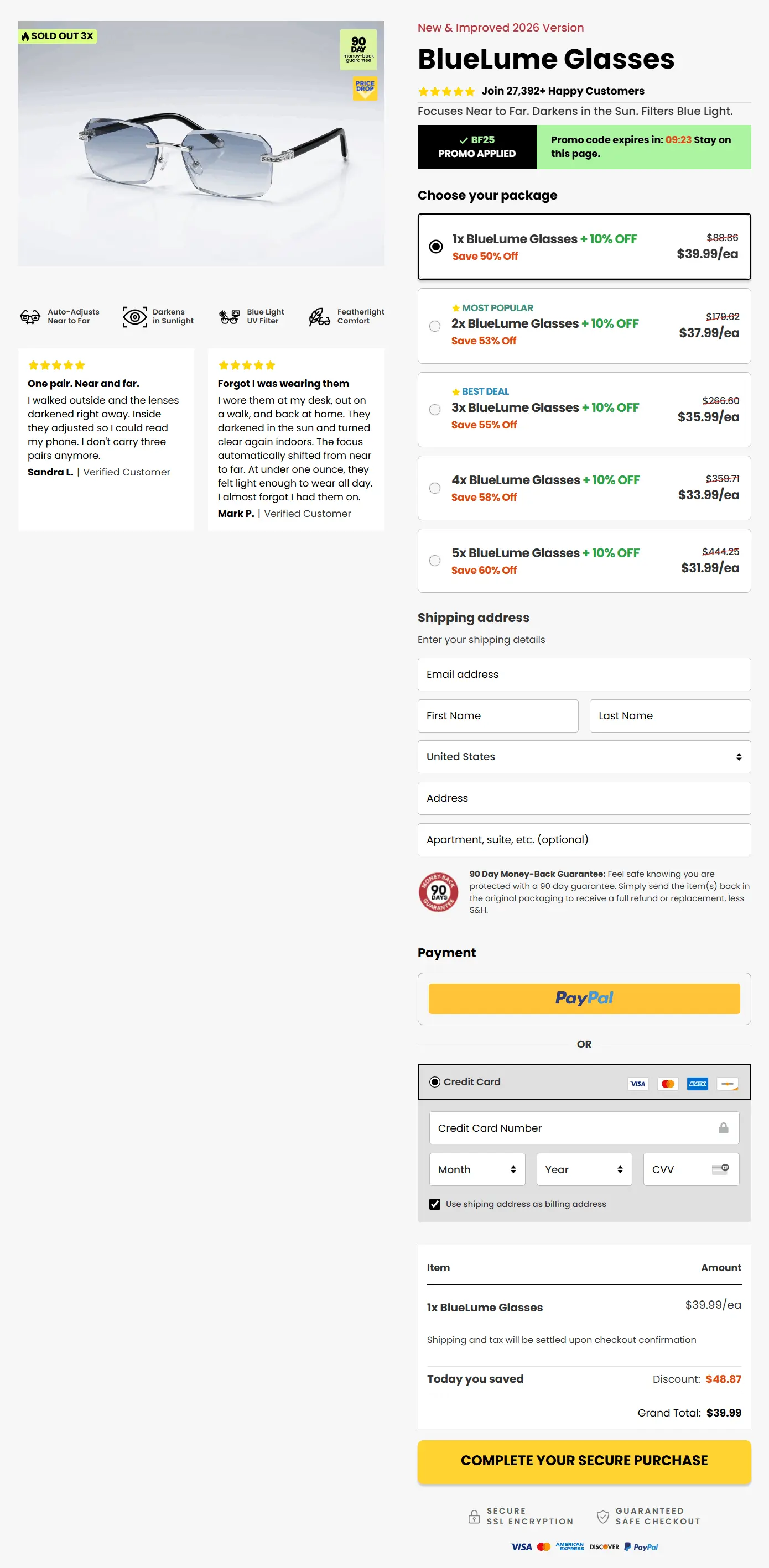
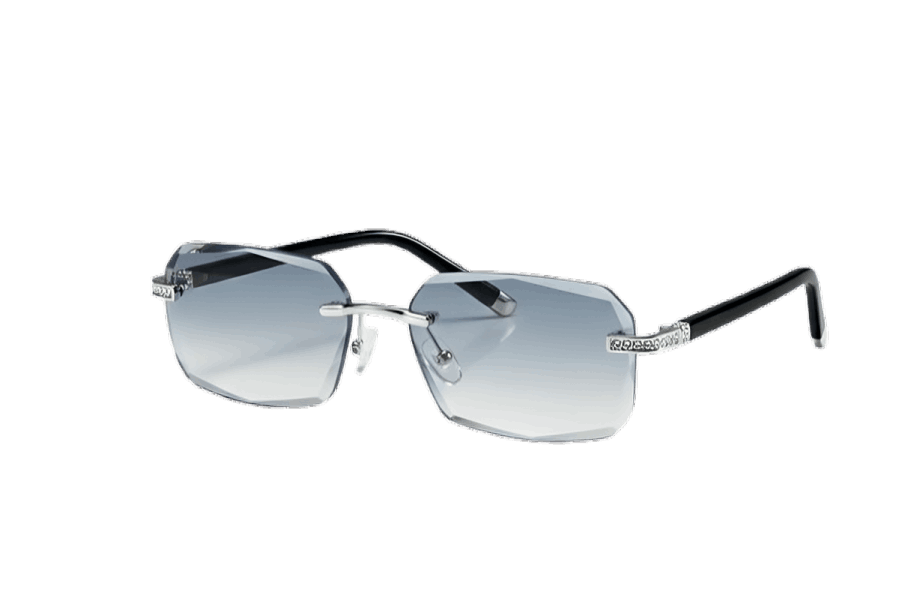
BlueLume Glasses rely on a completely passive, non-electronic optical design to provide multi-functional vision support. Despite high-tech marketing that might suggest digital or smart components, the device contains no batteries, microchips, or active screens. Instead, the lenses combine three standard optical treatments—progressive geometry, photochromic adaptation, and blue light filtering—into a single, lightweight frame weighing under one ounce.
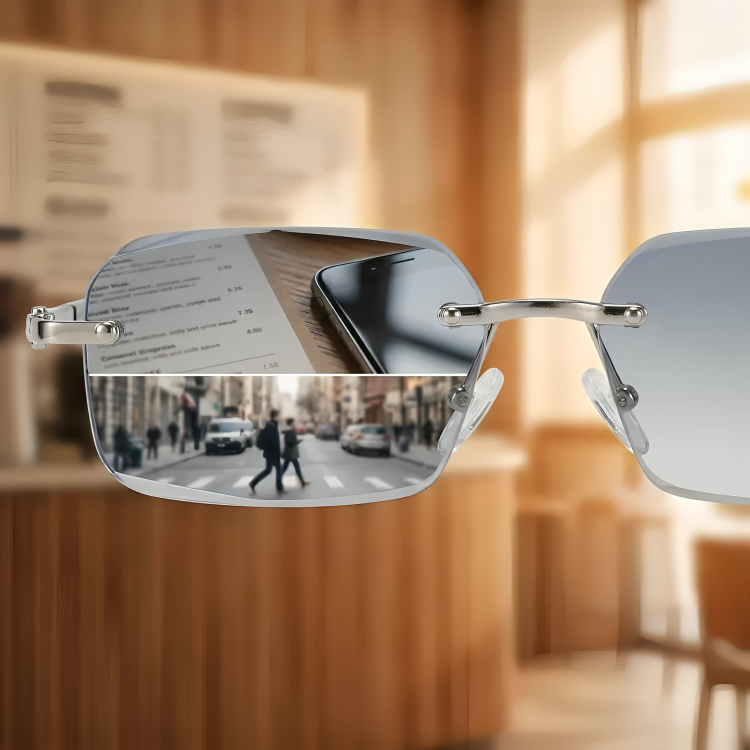
The core feature of the device is its near-to-far progressive lens geometry, which mimics the multi-focal designs traditionally prescribed for age-related reading difficulties. The lens power varies vertically, featuring low magnification at the top for distance viewing and increasing up to a +3.00D magnification at the bottom for reading close-up materials. Because these are pre-made, off-the-shelf glasses, they provide uniform magnification across both eyes without correcting for astigmatism or individual vision differences.
For outdoor adaptability, the lenses incorporate organic photochromic compounds that react directly to electromagnetic radiation. When exposed to ultraviolet (UV) rays from sunlight, these embedded chemicals undergo a reversible structural shift that automatically darkens the lens, turning them into temporary sunglasses. Once you return indoors away from UV light, the chemical reaction reverses, and the lenses gradually transition back to a completely clear state.
To assist heavy device users, the lenses are finished with a high-energy visible (HEV) blue light coating. This surface treatment is engineered to absorb or reflect a portion of the blue light wavelengths (400–450 nanometers) emitted by smartphones, laptops, and tablets. While the technology is marketed as a revolutionary all-in-one breakthrough, it is actually a convenient bundle of standard, widely available optical features designed for general eye strain and reading relief.